
Part 7. Breaking The Law
Planning a menu like no other. It's not a real restaurant. No tofu stir fry. And this weeks recipe, Chilli Poached Pineapple, Salted Coconut Butterscotch And Crispy Lemon And Coriander Sugar.

Hey ho, let’s go. Menu planning for Vanilla Black.
First up, a little disclaimer so we don’t get a chinning. Things are very different in the vegetarian and vegan world these days, there are some very good vegetarian and vegan restaurants around, or should we say Plant Based. The standard of UK vegetarian and vegan offerings now, compared to twenty years ago, is a completely different animal. We would like to think that our work and effort has had something to do with that. A smidgen of arrogance there.
We remember a time when we dined at a vegetarian restaurant in Birmingham many years ago. The chef came for a wee chat with us and said something to us, which afterwards made us see ourselves in a different light. He was referring to the fact that at that particular time we were pushing boundaries with vegetarian food, and he described it as, “you guys just stick your heads above the trench and don’t care if you get shot”. Cheers fella.
So anyway, back to 2004, we laid down some rules, boundaries if you like, and we stuck to them from day one. We often said it would be easier and cheaper to serve the dishes which other vegetarian restaurants were but that wasn't the point. Too easy. We didn’t write the rules down or anything, we were just conscious of where we were going with the food and what we wanted from a dining experience. Off we go.
1. First of all, we thought, surely diners want something which they wouldn’t normally cook at home. They want something which is new to them, maybe a new ingredient or an unusual combination. Actually, shouldn't that apply to all restaurants?
Imagine, you’ve planned a birthday night out with a couple of mates, you’ve had it arranged for a few weeks, you get a bit dressed up, put your white jeans on, get in the taxi, arrive at the restaurant, order a few pints of Stella, and then plump (remember that word) for mung bean and brown rice casserole. What’s the point? Stay at home, get a takeaway, or have a plywood and lentil sandwich. So we knew we had to be creative to give an unique experience.
2. The menu had to be different to what everyone else was doing. As we saw it, if you’re going out for a meal, it’s entertainment, it’s something to enjoy, it’s an experience you’re paying for. If you have a dish on the menu which is similar to that of another restaurant, why would someone choose you over the other joint.
3. No world food, no pasta dishes, too easy, no meat substitutes and nothing which was screaming healthy and wholesome. People could go elsewhere for that.
4. We wanted to introduce elements of Britishness to the dishes, steering away from veggie burgers and tofu stir fry. We’d bring in classic cooking but twisted into a vegetarian version, BUT, not just recreating a dish and missing out the meaty bit, but using the flavours as inspiration. Let’s explain. Remember that 80’s pub grub classic, Gammon and Pineapple? Well, we took the flavours of that in the early days of York, and ran it on a different course. It ended up as a double baked cheese soufflé with a smoked potato croquette, pineapple pickle and a poached duck egg. So you get the smokiness in the potato which represents the gammon, the pineapple pickle replaces the tinned pineapple ring, and the egg was there because often the dish was served with a fried egg. Oh yea, the cheese soufflé was there because of point 5.
5. Also, dishes had to have a focal point, this was very important. For example, if you have a meat dish, let’s say steak and chips, the meat is the focal point, the chips, side salad and sauce are the peripherals.
And that’s how we believed it should be with our vegetarian dishes, a focal point first, then a starch element, accompanied by the also important vegetables.
From experience, ploughing through a tasting menu of vegetables cooked various ways is often tedious, there needs to be other elements to create contrast. Chomping through a Detox Salad becomes dull after a few mouthfuls. The first spoonful of a chickpea and spinach curry is the same as the last spoonful. You need each element to be separate and have it’s own identity and clarity. Get it?
It’s like reading a book and each chapter is the same. They may well be very interesting chapters, you know, like this Substack, but if each chapter and spoonful are the same as the last, what’s the point?
6. There had to be some fat present on the plate, again, as there is in a meat dish. Fat gives a feeling of fullness, image a salad without a little oil, that little splash of oil is necessary. Fried onions or boiled onions, which do you want? Fried, obviously. Boiled potatoes or roast potatoes? Yea you know what the answer is. It’s in our primal instincts to crave fats, it gave us energy when we were living in caves and wearing a layer of bog mud. It helped us to survive. From our experience it seems that restaurant menus thought that all veggies wanted healthy and low fat dishes. Well, our thinking was that if we were out for a meal we wanted something a bit indulgent, not counting the calories and weighing up the fibre content. So no detox salad or fat free desserts would be on our menu.
7. It just so happens to be vegetarian. Another important point. It was about the food, not the label. We weren't preaching to people, we weren't trying to convert people. If a meat eater came to our restaurant, well great, and if they ate chicken the next day, that had nothing to do with us. In our humble little opinion, if we preached to meat eaters, chances are, they wouldn't visit the restaurant. So we didn't. It was about the food, everything else just happened to follow.
8. It had to be food that made you think. Feeding your mind, as well as your stomach. Different flavour combinations you hadn't had before, ingredients twisted to work in a different form, desserts become savoury dishes and vice versa. Think Sweetcorn Crème Brûlée With Smoked Paprika Biscuits And Chilli Salsa. It was a starter by the way kids.
You go to Tesco and get a sandwich meal deal, eat it and forget it. Done! The same with a lot of restaurants, it’s just fuel, fodder. We wanted people to still be thinking about what they had eaten with us a week later. It seems to have worked, even now, many years later, people still remember dishes they had eaten with us. Job Done!
So obviously the menu at Vanilla Black evolved over time, a lot, but we always stood by the blurb above. It became our law.
And all this was because we wanted to give the vegetarian world a shake up, and have vegetarian restaurants regarded as regular restaurants. Yup, sounds strange now, but there was a time when they were on the outskirts of the restaurant world.
We were becoming obsessed with shedding the vegetarian label, which was difficult as it was also our point of difference, the selling point. We believed that we could do this via the food, and the general feel and look of the restaurant.
We ran a lot these thoughts past people, it’s important to listen to opinions, not necessarily agree with them, but hear them. We did our market research, and ignored a lot of the daft comments.
Wanna hear some of the responses? You certainly do you know.
First off. A guy who I used to work for was concerned that being completely vegetarian was a bit niche, so he suggested that we add a couple of meat dishes. Eh? Wouldn’t that mean it’s just a regular restaurant but with a generous amount of vegetarian options. Did we carry on asking for opinions? Oh yes.
Another one was, “will students be able to afford to go to your restaurant?”. Please stop! Why why why did people think that the only vegetarians in the world were students? In the early weeks of Vanilla Black it was so encouraging to hear diners echo of our thoughts, and tell us that it was refreshing for a restaurant to believe that vegetarians can afford to splash out on a meal in an adult environment.
We also heard this little beauty, a restaurant which doesn't serve meat or fish isn't a real restaurant. Hahahaha! That’s a tickler isn't it?
Go on then, one more. “Oh it sounds nice, but I won’t be able to come along, I’m not vegetarian”. Really? It sounds like we were talking to a bunch of donkeys, but honestly, these were actual people. The answer to that one was, “you’re not Chinese but you go to Chinese restaurants. You’re not Italian but you eat pizza. You’ve eaten tomato soup haven't you? That’s vegetarian. Cornflakes, you've definitely eaten them, and they are vegetarian”. Some people weren't too fussed on our responses.
Right, back to the menu. Now, we had already made things difficult for ourselves by not using a bunch of stereotypical ingredients.
If you think about it, vegetarian food is already a challenge, you’ve deleted lamb, beef, pork, chicken, turkey, offal, fish, seafood, game and any products containing traces of animal, such as rennet in cheese, from your list.
And to make it a teeny bit more of a challenge, we would have a separate menu for lunch and dinner. With no overlaps. If you're not from the restaurant world, that may not seem like a bit deal. But it is a big deal. Let’s quickly explain, generally, after lunch service you start prepping for evening service. Not too taxing as you probably have some gear left from lunch, so you're basically topping up. Then the next day you start prepping again for lunch, etc.
However, having two different menus meant that after lunch you’re starting on a new menu for evening service, then the next morning, if you have any prep left from the night before, it doesn't matter, it doesn’t help, because now you're prepping for the lunch menu. It’s a lot to do. Like a clothes shop selling casual stuff half of the day, then changing everything around and selling evening wear for the rest of the day. They would have to change the layout, the prices, the labelling and all the other bits behind the scenes.
See, you didn't realise it worked like that did you?
However, as we saw it, tourists who were plodding through the medieval cobblestones of York didn’t have the time, or patience, to plough through a three course lunch, they wanted something decent but also wanted to be out sharpish so they could go looking for Vikings. And it worked, generally lunches were busy, appealing to the cobblestone plodders, and evenings appealed to those wanting something a bit more flashy and unusual.
So, from a financial point, it worked very well for us.
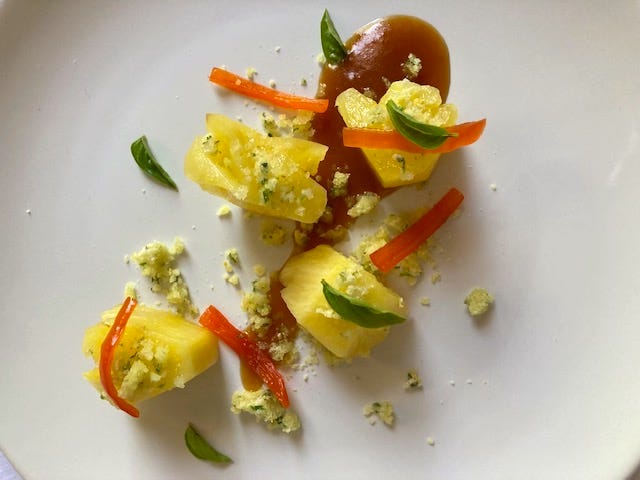
Oh, the food thing, here’s this weeks recipe…
There’s a back story to this one. In the early days I wanted to do a dessert based around Thai flavours, however, I was afraid the general public would throw their arms up in the air and run around screaming at such a mad idea. Donna told me to just do it, but it didn’t happen. For the record, many years later, when we had moved to London, we did a Thai inspired dessert, not this one though. People liked it.
Chilli Poached Pineapple, Salted Coconut Butterscotch And Crispy Lemon And Coriander Sugar
Serves 2. To be honest, this dish is best prepared the day before, but if you can’t be bothered, no worries. There’s a lot of sugar work to be done here, but have faith, you’ll be an expert after this. You will have some pineapple syrup left. Use it in a trendy cocktail. And there will be some butterscotch left, have it later on ice cream.
This dish is suitable for vegans and is wheat free. And have a look at the pics if you need help. Or send a message.
Ingredients
Pineapple
½ Pineapple.
600g Moist water.
250g Granulated sugar.
Chilli Up to you, red or green, choose the type and heat level you like.
Coconut Butterscotch
140g Granulated sugar.
200g Coconut milk, one of those 400ml tins. But you only need half of it. Oh, and not that low fat gunk.
1/4 tspn Salt.
Lemon and Coriander Sugar
100g Granulated sugar.
10g roughly Fresh coriander, use the stalks also.
Zest one lemon Make sure it’s zested very finely.
Method
Pineapple first -
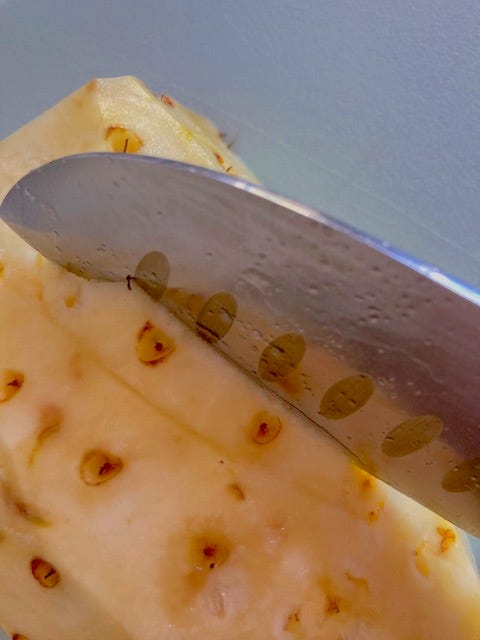
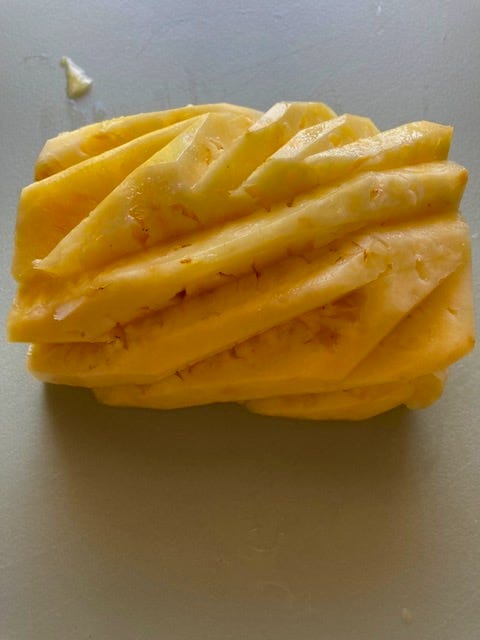
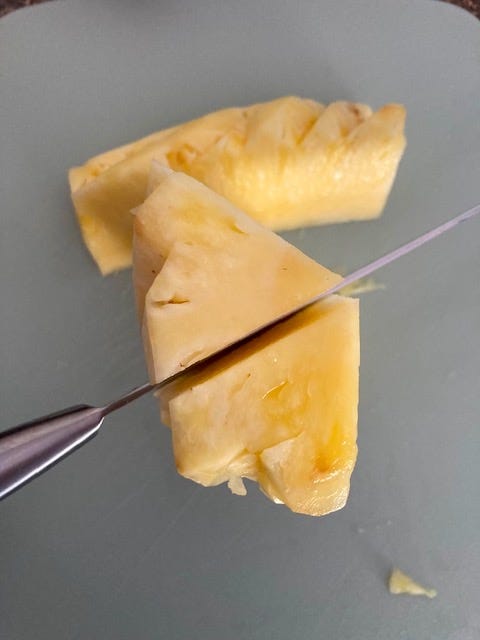
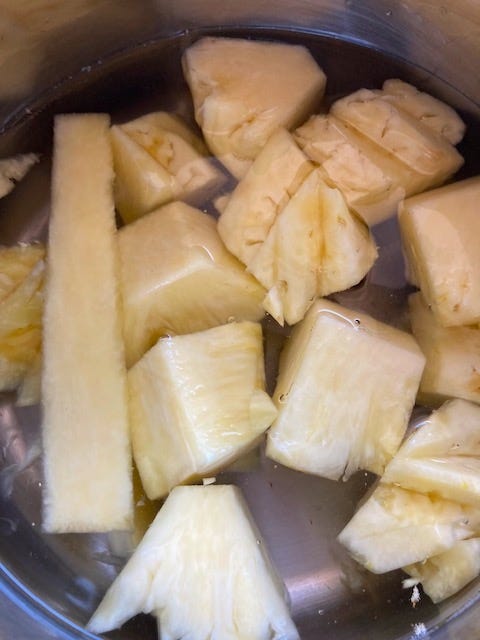
-With a sharp knife peel the pineapple, then make grooves to remove the ‘eyes’. Then stand it up and cut into three equal wedges. Slice the inner core away but keep it.
-Cut each wedge into 4 smaller pieces, bring the 600g water to a boil, then add the pineapple pieces as well as the core, to the pan. The core gives flavour.
-Bring to a boil, then remove the pineapple and stick it in a good size bowl.
-Slice the chilli into neat matchstick slices. Add to the pineapple water along with the 250g sugar. Bring to a simmer and hold that simmer for exactly 10 minutes. Then turn off and add this to the bowl with the pineapple.That’ll finish the cooking process.
Now the coconut bit -
-Add the 140g sugar to a saucepan. DO NOT STIR. Put a medium heat under it and let it melt. DO NOT STIR. Keep the coconut stuff close to hand.
-You need the sugar to go a brown mahogany colour. You can move the sugar around a little, but DO NOT STIR, otherwise it will crystallise like it does on Bake Off. Keep your eye on it.
-As soon as it goes a beautiful golden brown colour, take it off the heat and immediately add the coconut milk. BE CAREFUL, IT SPITS. Now stir.
-Now put back on the heat and hold on a simmer for exactly 6 minutes. Stir occasionally as there will be some lumps and it could stick.
-Remove from the heat, add 1/4 teaspoon salt, stir, then transfer to a bowl. If there are any lumps, just ignore them, I do.
Crispy Sugar -
If you know anything about sugar work you will know that stirring sugar when making syrup causes it to crystallise, obviously you can prevent this, but in this next bit we need it to actually go wrong.
-Chop the coriander very very finely.
-Add the 100g sugar to a saucepan with 2 tablespoons of water. Set the heat to medium and DO STIR. Make it go up the sides a bit. Keep heating and stirring.
-You will see that it will go a little foamy and cloudy. As soon as this happens very quickly throw in the coriander and lemon zest and stir it in. Work quickly but carefully. Remove from the heat and add to a plate to cool.
-It should look like crispy greenish yellow crunchy sugar. Smash it up a bit.
Allow everything to cool. If using the next day pop the pineapple and sauce in the fridge but just cling film the sugar or put in an airtight container to stop it going sticky.
-Plate it, add a little sauce, then the pineapple and sugar. Use the chilli as garnish.
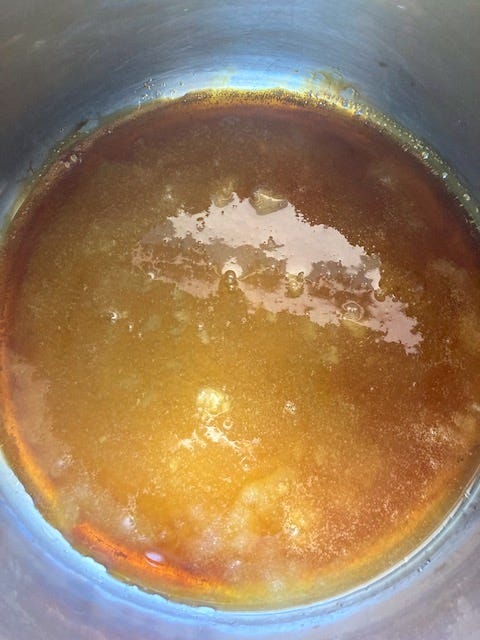
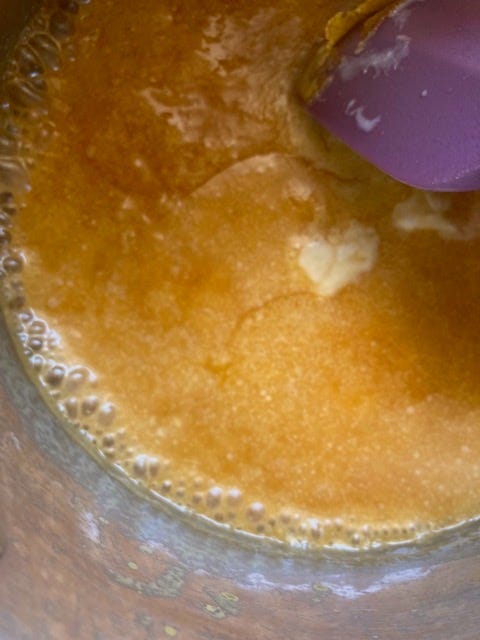
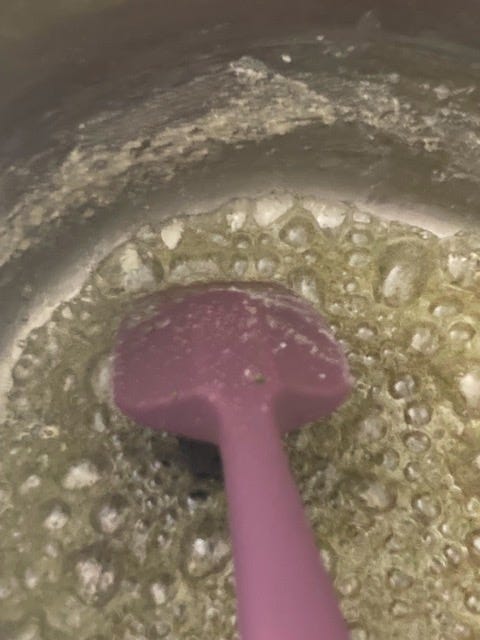
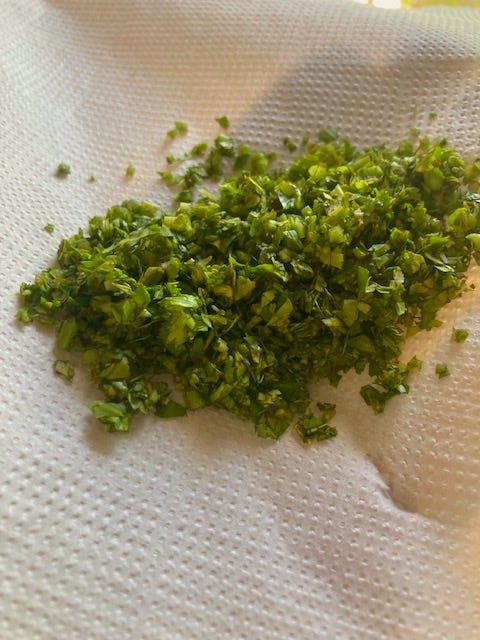
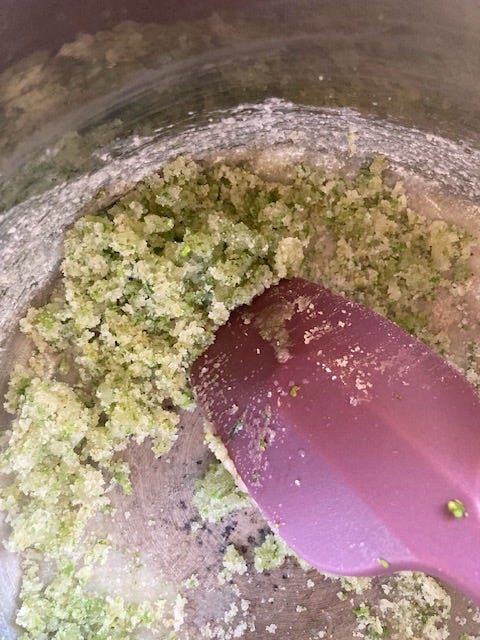
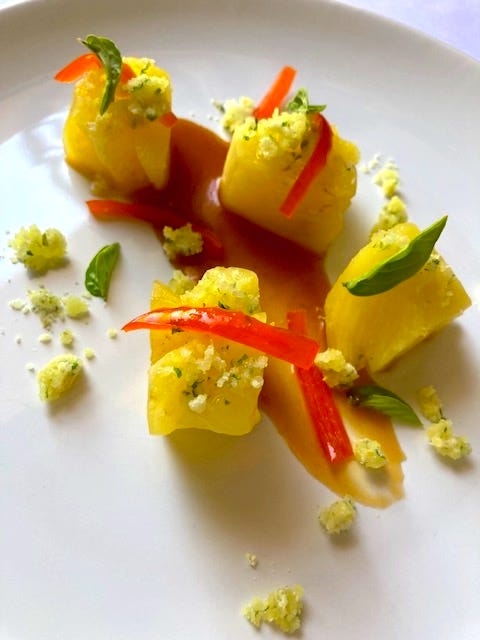
Now, I guarantee someone turned their nose up and squeaked that they don’t like coriander. Well, as I always say, have a mess around, replace it with basil instead. There you go. Sorted. To be honest, in the pics, I used basil as garnish.
Join us next week for a spot of decorating with Keane, and some serious bodging. Obviously! Catch you soon, Andrew and Donna.
Such a great read! Your passion for creating unique, unforgettable veggie dishes really shines through.
That double baked cheese soufflé dish sounds pretty epic, too!
Right, off to see the Vikings.